


Updated October 2026
Running a nonprofit is one of the most rewarding yet most demanding ventures a person or organization can undertake. Number of houses built, people fed, bookbags packed, and lives saved are sustained by countless hours in the trenches trying to attract sponsors and supporters, recruit volunteers, and encourage donations… year after year after year.
Balancing hope and vision with often limited resources, not to mention social, political, or economic challenges, can make one wonder how to truly make a lasting impact.
That’s where a strong marketing strategy becomes the engine of your mission.
The core pillars of nonprofit strategies are:
- Brand awareness
- Donor engagement
- Donor retention
Each pillar has a distinct purpose, but together, they create a cycle that’s more durable than any single campaign.
QUICK ANSWER: What Are the Three Pillars of Nonprofit Marketing?
The three pillars of nonprofit marketing are brand awareness, donor engagement, and donor retention.
Awareness gets your mission in front of the right people. Engagement converts that attention into meaningful action. Retention creates long-term partners and advocates who help sustain and amplify everything you do.
Pillar 1: Brand Awareness
How Do Nonprofits Build Brand Awareness?
Before anyone can support your mission, they need to know it exists. Brand awareness isn’t just about name recognition, clever taglines, and flashy logos; it’s predicated on discoverability, credibility, and clarity about what you stand for and why it matters.
That starts with your brand identity: your mission, your values, your voice, and the consistency with which they show up across every touchpoint. Without this, you’ll undermine every other marketing dollar you spend.
When someone encounters your organization — on your website, in their social feed, or at an event — they should immediately understand who you are and feel something positive about it. And brand consistency doesn’t just create awareness. It creates trust. And trust draws contributions.
Your Website Is Your First Impression
Donors don’t stumble into giving. 75% of people verify a nonprofit’s achievements before deciding to give.
That means your site is not just a discovery tool – it’s one of your most important credibility assets. Donors want to feel something when they arrive: that this organization knows what it’s doing, that their money will matter, and that the people behind it are trustworthy.
It should also load fast, make navigation a breeze, and function on mobile.
That last point matters more than ever: According to a recent report, 43% of online donations are made on mobile devices. A site that isn’t optimized for mobile isn’t optimized for donors.
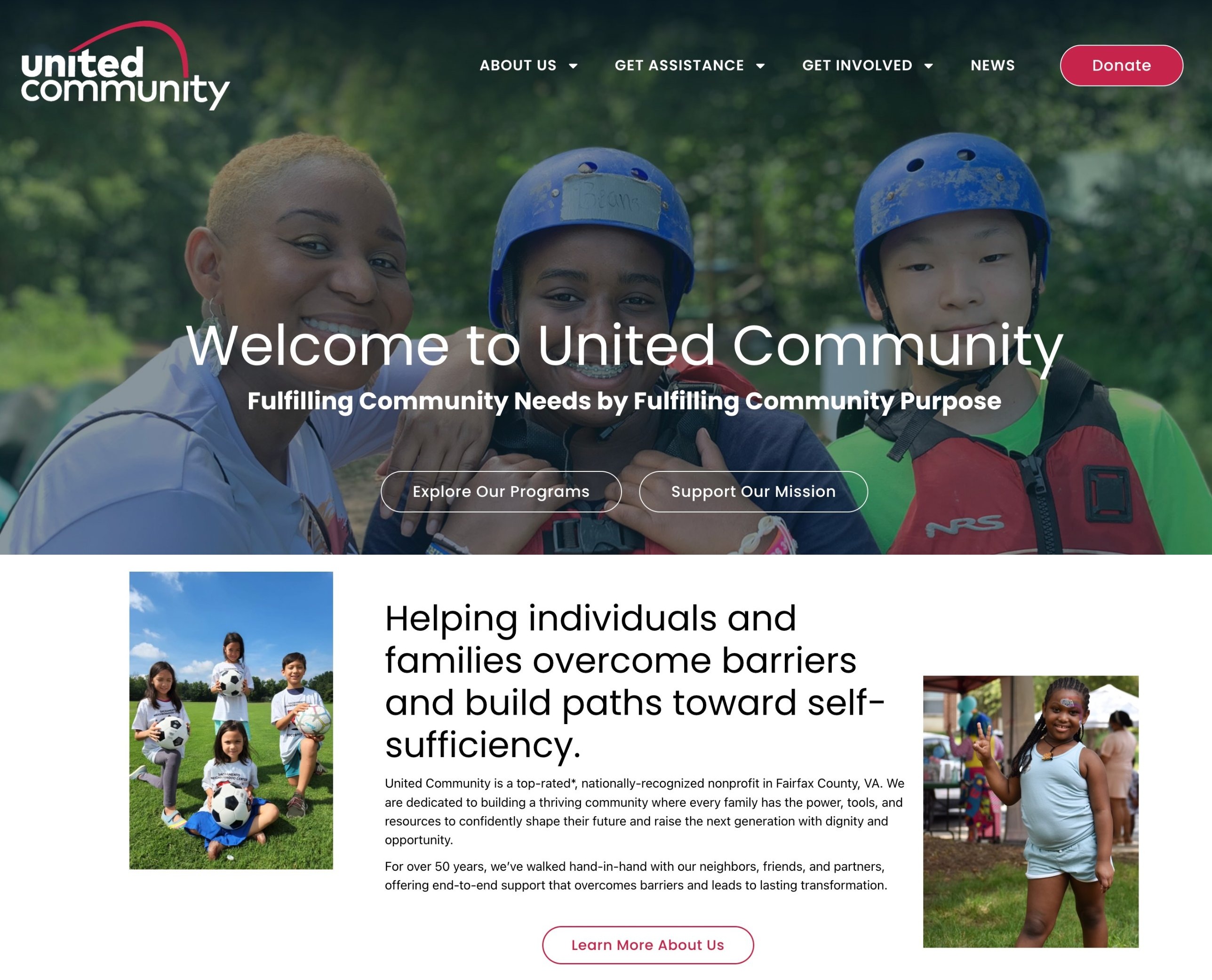
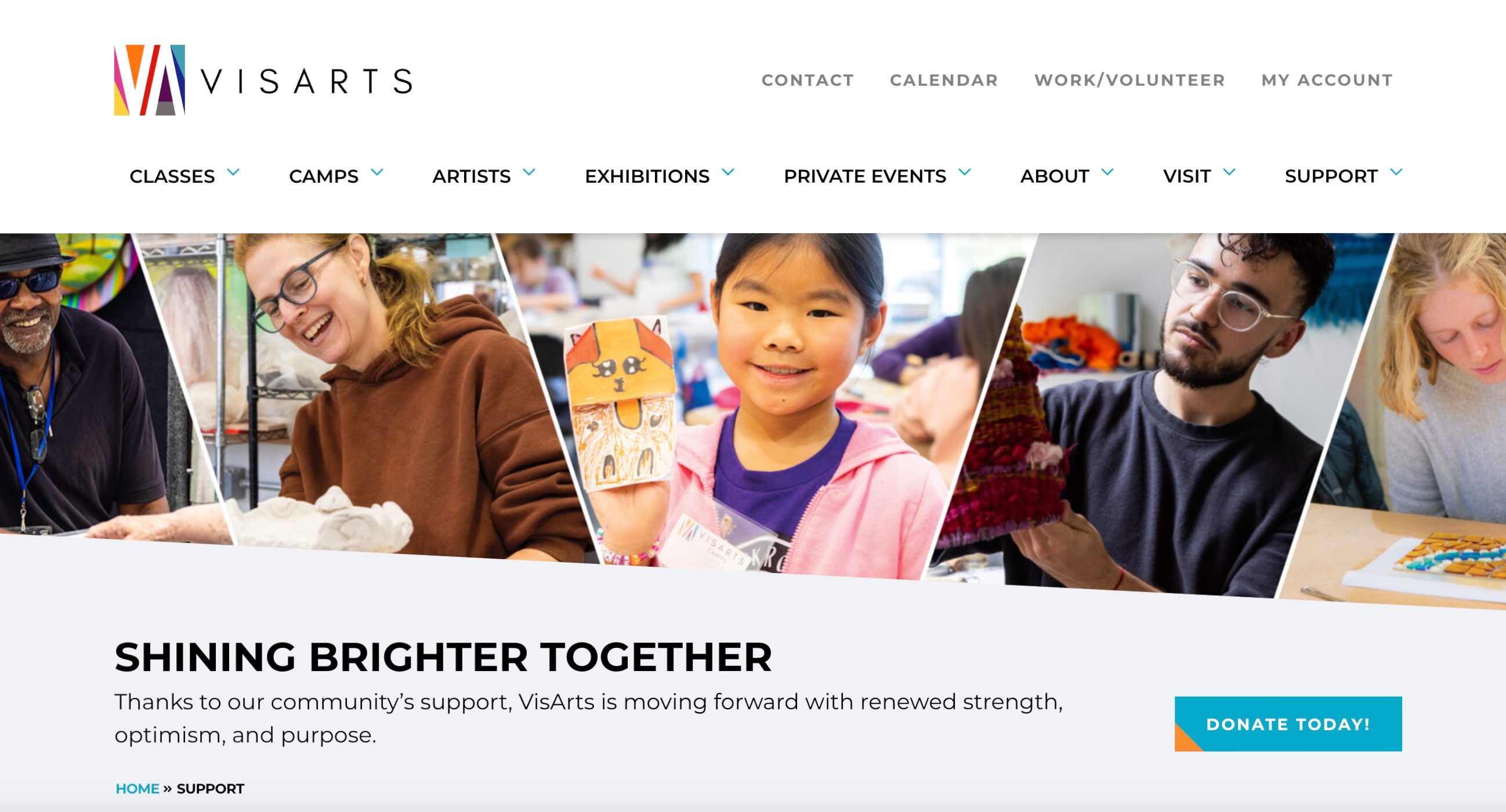
VisArts Center and United Community are strong examples of nonprofit organizations whose web presence earns trust at first glance. Both lead with clear mission statements, use compelling visuals that center the people they serve, and make it easy for visitors to understand how to get involved or give — without making users hunt for a donate button.
Get Found Where People Are Searching
Search engine optimization (SEO) matters here, too. Structure, metadata, local signals, and descriptive content that search engines can understand – and trust – is nonnegotiable for showing up in AI answers, LLM citations, and traditional search results.
That means blog posts, resource guides, and FAQ pages that answer real questions donors, volunteers, and grant-makers are already asking – then ensuring that the pages are organized and optimized for maximum search engine visibility, whether that engine is ChatGPT or Claude, Google or Bing, AI answers or blue links.
Google Grants and Paid Advertising
Organic search takes time to build. Paid advertising can fill the gap.
Google Grants is the obvious place to start. Eligible nonprofits can access up to $10,000 per month in free Google Search advertising. If you’re not using it, that’s a conversation worth having soon.
Beyond Grants, paid social advertising on platforms like Meta (Facebook and Instagram) can be highly effective for nonprofits targeting local communities, driving event attendance, and promoting specific campaigns.
LinkedIn is worth considering for organizations seeking corporate partners, major donors, or professional volunteers. And for nonprofits with strong visual content or video assets, YouTube pre-roll ads offer another way to build awareness with a targeted audience.
The right channel depends on who you’re trying to reach and what you’re asking them to do. A multichannel approach — one that pairs organic search with strategic paid placements — tends to outperform either alone.
Social Media: Authentic Beats Polished
Social platforms can be highly effective awareness channels. More than 5.79 billion people worldwide use social media, with the average user spending 141 minutes on social platforms every day. And to make an impression, you don’t have to post five times a day or produce perfectly packaged content.
Authenticity outperforms polished campaigns on social media because people can tell the difference between a brand that’s performing and one that’s actually present. So, behind-the-scenes moments, real stories from the people you serve, unscripted field updates — that’s the content that people remember, that earns shares, and inspires.
For awareness, the goal is reach: getting your mission in front of people who don’t know you yet. What you do once you have their attention — that’s where the next pillar comes in.
Pillar 2: Donor Engagement
How Do Nonprofits Engage Donors and Supporters?
Awareness gets you in the room. Engagement is what you do once you’re there.
Someone followed you on Instagram. They subscribed to your newsletter. They spent a few minutes browsing your website. That’s not a donor yet – but it is the start of a relationship, and it’s how you build on those relationships that determines whether you attract donors, sponsors, or volunteers.
Social Media: From Reach to Real Connection
The same platforms that build awareness become communities and conversation tools. Ask questions, respond to comments, celebrate your community publicly, and shine the light on the people behind the mission.
On Facebook: Share a before-and-after from a program participant, with their permission and their own words in the caption. No stock photos. No corporate speak. Just the story.
On Instagram: Go Live from a community event, a volunteer shift, or a program in action. In-the-moment content like this consistently outperforms polished posts because people can feel the energy of something that’s actually happening.
On LinkedIn: Spotlight a volunteer or staff member doing meaningful work. B2B donors and corporate sponsors pay attention here, and personal stories cut through the professional noise.
Content That Inspires and Proves
 Emotional storytelling matters. So does proof. Donors don’t just want to feel inspired — they want evidence that their support is making a tangible difference. Pair compelling narratives with concrete outcomes: families served, students placed, meals distributed. Inspiration without evidence is a nice story. Evidence without inspiration is a spreadsheet. You need both, and you need them in the same room.
United Community does this well. Real photography of the people they serve. Specific, prominent impact numbers. A live donation ticker that shows contributions happening in real time. Programs laid out clearly, with plain-English descriptions and easy “Learn More” paths.
Their content invites people into their story, makes them part of the narrative, builds trust, and communicates real impact.
Make It Easy to Give
Great storytelling only goes so far if the path to donate is unclear or frustrating. The user journey to your donation page matters as much as the page itself.
Your calls to action should be visible, convincing, and easy to find — not buried in the footer or hidden behind three clicks. An embedded donation form converts better than a redirect to a third-party site because it keeps donors in the moment and removes a step that too many people abandon.
Events: Where Interest Becomes Involvement
Whether it’s fundraising galas, volunteer days, or community awareness campaigns, events turn passive supporters into active participants. They create shared experiences, which are among the most powerful relationship-building tools available. They also give your existing supporters something to invite their networks to, which organically extends your reach without additional spend.
These same events naturally feed the rest of your outreach channels: social media videos and posts, fresh content for your website, email campaigns that encourage further participation or thank donors and volunteers for their contributions.
Ironistic offers full event management and experiential planning as part of our marketing services — from concept, promotion, and execution through post-event remarketing campaigns.
Email: Underrated, Overdelivering
Email consistently delivers some of the highest ROI for nonprofit marketing. It’s among the more budget-friendly options available, which matters when every dollar is accountable to a mission.
The numbers back this up: 33% of donors say email inspires them most to give — ahead of social media (29%), a nonprofit’s website (17%), and print (9%).
Welcome messages pull new supporters into your story, your mission, and the real work happening on the ground. Thank-you emails tell donors you appreciate their support. Campaign emails build momentum around specific initiatives. Impact updates close the loop for donors and show the real-world impact of their contribution.
Email is also where the handoff to retention begins. 48% of donors cite email as their preferred channel for receiving updates and fundraising appeals — with direct mail a distant second at 21% and social media at 17%.
The right message at the right moment makes someone feel less like a mailing list contact and more like a friend and neighbor.
Pillar 3: Donor Retention
How Do Nonprofits Encourage Long-Term Support?
Here’s a number worth mulling over: The average nonprofit retains fewer than half of its donors year over year. In fact, overall donor retention sits at just 43.3% — and for first-time donors, it drops to less than 19%.
That means many organizations are scrambling to replace supporters they’ve already won — often at a higher cost than simply retaining the ones they’ve already engaged.
Retention might not sound like the most exciting strategy, but it’s where long-term sustainability lives – and it’s how nonprofits can best manage their resources and extend their impact.
Email, Stewardship, and Personalization
The same channel that drives early engagement becomes your most reliable retention tool when used strategically and intentionally.
Thank-you messages, anniversary acknowledgments, renewal campaigns, impact reports — these aren’t courtesies. They’re stewardship. And stewardship is what turns a one-time gift into a long-term commitment, first-time interactions into continuous momentum.
And research shows the investment pays off. Consistent, frequent communication with online donors results in a 41.5% increase in revenue.
What makes stewardship land is personalization. A first-time $25 donor and a five-year recurring partner shouldn’t be receiving the same message. Segmented, personalized communication tells supporters that you know who they are and that their specific contribution matters.
That applies across channels, too. Even direct mail can be a meaningful personalization tool for donor segments that respond better to something tangible in hand. It’s one more channel Ironistic can help you put to good use.
Make Recurring Giving Easy and Compelling
 Monthly donors carry higher lifetime value and lower lapse rates than one-time givers. According to Giving USA, the average recurring donor has a lifetime value of $7,604 — compared to $3,621 for non-recurring donors.
Making it genuinely easy to enroll in a recurring giving program and communicating the cumulative impact of that ongoing commitment should be a given in any retention strategy.
VisArts’ Donation page makes giving a monetary gift and choosing whether it will be one-time or monthly simple, clear, and easy.
Events That Honor Your Supporters
At this stage, events serve a different purpose. Donor appreciation nights, volunteer recognition gatherings, and annual campaign kickoffs aren’t recruitment tools. They’re community-building tools.
Making long-term supporters feel like allies and partners rather than line items in a donor database can pay dividends, which should not be underestimated.
Know What’s Working and What Isn’t
Nonprofits can’t afford to keep funding what isn’t performing. Donor retention rate, recurring gift growth, email engagement trends, event attendance, social sharing — these are the numbers that tell you whether a strategy is actually building momentum.
Vanity metrics – likes, follower counts, and raw post impressions – can look great in a quarterly report yet mean very little in practice. Track what’s actually moving the mission forward and change what’s not/isn’t.
We Show Up for Nonprofits
At Ironistic, we don’t just market for nonprofits — we put our own resources behind them. We’ve been a proud sponsor of RUN! GEEK! RUN! since 2016. This is an annual 5K and 1k Fun Run in Alexandria, VA that benefits a different local nonprofit each year. In total, the race has raised $282,800 for its beneficiaries. Our 2026 recipient is the Scholarship Fund of Alexandria — an organization that has awarded over $20 million in scholarships to Alexandria City students over 40 years. 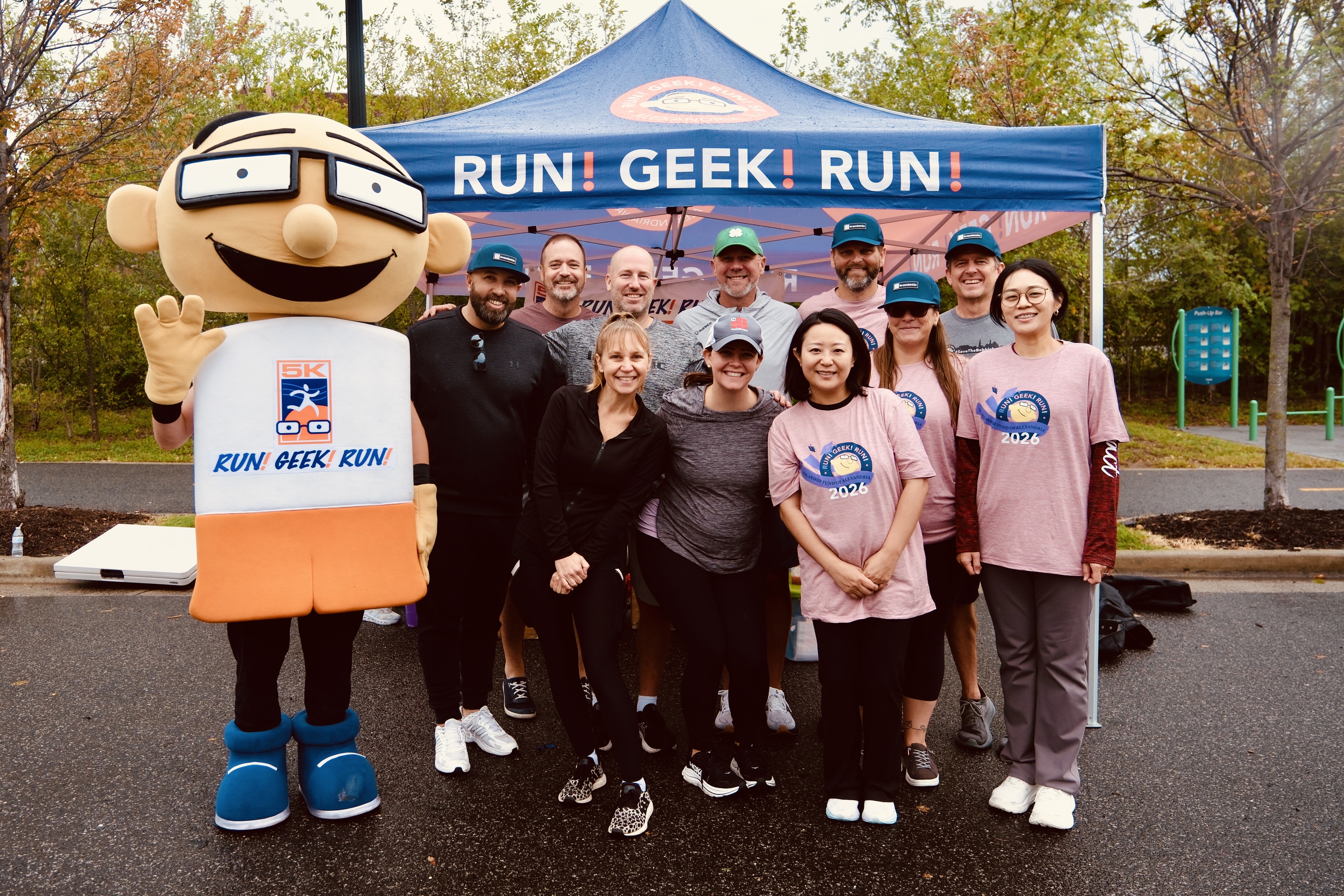
Frequently Asked Questions About Nonprofit Marketing
How can nonprofits build brand awareness on a limited budget?
Start with what you control: a well-optimized website, a consistent presence on the platforms where your audience lives, and content built around the questions your supporters are already asking. Google Grants can add up to $10,000 per month in free search advertising for eligible organizations. Email is inexpensive and effective. Authentic storytelling costs time, not a production budget — and on social media, it often outperforms high-gloss content anyway.
What digital marketing tools work best for nonprofits?
The right mix depends on your audience and goals, but a strong foundation includes a search-optimized website with simple user journeys and clear call-to-actions, email marketing, and a consistent presence on one or two social platforms where your supporters are most active. Google Grants is worth pursuing for eligible organizations. For broader reach, paid social advertising and event marketing can extend that foundation significantly.
What are the most common nonprofit marketing mistakes?
Running campaigns without a strategy behind them. Treating each channel as its own separate effort rather than part of a connected system. Focusing almost entirely on acquisition while neglecting the donors already in the fold. And measuring success by likes and follower counts rather than retention rate, recurring gift growth, and actual revenue impact.
How do nonprofits know if their marketing is actually working?
Track what moves your mission forward — donor retention rate, recurring gift enrollment, email engagement trends, event attendance, and donation page conversion rates. If you’re only tracking likes, follower counts, and open rates in isolation, you’re missing the signals that matter. A good marketing partner helps you connect the data to the decisions.
How to Give Your Mission the Strategy It Deserves
Whether you’re working to get your name out there or strengthening the relationships you’ve already nurtured, a connected strategy makes all the difference.
Ironistic brings the full picture: brand strategy, traditional and digital marketing, event management, website development, design, and direct mail.
We can make all of it work together – the best strategy for the greater good.
Fill out the form below, and let’s build some momentum.