10 Tips for Writing LinkedIn Articles:
How to Turn Insights Into Influence
LinkedIn articles now show up in AI search answers, not just user feeds. Explore 10 tips for writing ones that…
Read More

Updated March 2026
Running social ads shouldn’t feel like a high-stakes game of poker.
But for a lot of small and mid-sized businesses, it does. You boost a post. You launch a campaign. You tweak a few settings. And then you hope.
Here’s the truth: Facebook and Instagram ads can work really well for SMBs. However, at the same time, the algorithm is smarter, the competition is heavier, and user fatigue is real.
If you want sustainable results, you need structure and strategy. Not hoping. Not guessing.
Let’s simplify this.
We’ll dive into:
Meta owns Facebook. Meta owns Instagram. Both Facebook ads and Instagram ads run through Meta for Business and operate inside the same Ads Manager.
That means:
You may wonder — can you run Facebook ads on Instagram and vice versa?
Yes. In fact, most campaigns automatically run across both platforms unless you manually limit placements. But here’s where nuance matters.
 Facebook users:
Instagram users:
So how do you decide?
Ask yourself:
For most SMBs, the smartest move is to test both and let performance data guide expansion.
This isn’t about picking a favorite platform. It’s about picking what performs. That’s where strategy begins.
Short answer: Yes.
Meta isn’t a niche platform. It’s one of the largest advertising ecosystems in the world.
Back in 2010, Facebook generated just under $2 billion in ad revenue. By 2024, that number had grown to over $160 billion annually — almost entirely from advertising.
That kind of growth doesn’t happen by accident. It happens because businesses keep investing, and users keep engaging.
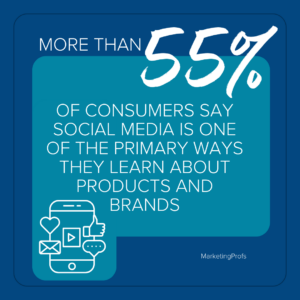
MarketingProfs reports that more than 55% of consumers say social media is one of the primary ways they learn about products and brands. For Gen Z, that number jumps to nearly 80%.
For SMBs, that matters. Because if your audience is already on social — and your competitors are already advertising there — the question isn’t whether Meta ads work. It’s whether they’re working for you.
Now, before worrying about copy, audiences, or creative, you need the right objective.
One of the most common mistakes SMBs make is optimizing for the wrong goal.
Meta optimizes the way you tell it to:
So ask yourself: Do I want leads? Do I want appointments? Am I cultivating awareness before a launch? Am I retargeting users who’ve already shown an interest?
Those answers all generate very different outcomes. Once you have the end goal in mind, structure your campaigns accordingly:
Example:Let’s say you’re a local car dealership wanting more test drives on pre-owned SUVs.
Instead of running one campaign for traffic, one for engagement, and one for leads, you run one Conversion campaign optimized for scheduled test drives.
You target:
Inside that campaign, you test:
Keep it focused. Keep it measurable. And resist the urge to run five objectives all at once.
Meta’s algorithm has evolved and performs best when it has room to learn.
Overly tight targeting can strangle delivery. However, broad targeting paired with strong creative frequently outperforms multi-layered interest stacks, like “Homeowners” and “HGTV” and “DIY Network” and “Married”.
For SMBs, a wise approach looks like:
If your audience is under 50,000 people, delivery may stall. If it’s under 10,000, you’re often too narrow.
And don’t obsess over “AND vs OR” logic unless you have significant spend and data volume. If you’re constantly adjusting targeting every 48 hours, the system never stabilizes.
For most modern campaigns, creative drives performance more than hyper-micromanaged targeting. So, let the algorithm work — but ensure it has enough data and quality signals to work with.
This is where most Meta ad performance is won or lost. Most SMBs think targeting is the lever. It’s not. Creative is.
If you ignore how users behave on Facebook vs. Instagram, you’ll waste impressions — and budget.
Same backend. Different consumption habits.
On Facebook, longer copy can work — especially for offers that require explanation. Education and benefit-led storytelling often perform well.
On Instagram Feeds, copy truncates faster. Shorter, sharper messaging tends to outperform. Visual storytelling does more of the heavy lifting.
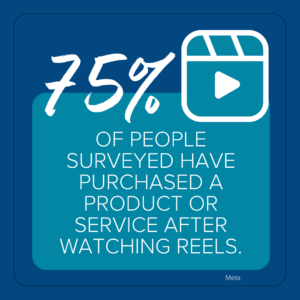
On Reels, speed wins. The first 2–3 seconds determine everything. Many users watch without sound, so captions and text overlays matter. Vertical framing matters. Clear messaging in the first frame matters.
Behavior drives format. Format drives performance.
Meta allows:
But note: Just because you can use 125 characters doesn’t mean you should.
Here’s the reality:
Most users only see the first 1–2 lines. If your message gets cut off and users have to click “See More,” friction increases. And friction kills conversion.
Weak:
“We’re proud to offer competitive financial solutions for our community.”
Stronger:
“Still paying 24% interest on your credit card balance?”
And consistency matters, too.
Brand recognition builds over frequency. Familiarity builds trust. Trust reduces hesitation.
But creative fatigue is real. If you’re not refreshing creative every 3–6 weeks (depending on spend), performance will dip.
Fatigue shows up as:
Don’t wait for collapse. Refresh and rotate proactively.
Let’s talk money.
The good news: You don’t need enterprise-level spend to see results. But, you do need enough budget to generate meaningful and actionable data.
If your daily budget can’t produce consistent impressions and conversions, or if it only generates a handful of clicks a day, the algorithm struggles to optimize.
For most SMB campaigns, that means:
Avoid:
As a general guideline, your budget should allow you to generate at least 5–10 meaningful conversion events per week. Fewer than that, and the algorithm struggles to optimize efficiently.
Sustainable advertising isn’t about overnight spikes. It’s about predictable returns.
Paid social drives visibility. Organic content builds credibility.
If someone clicks your ad, they usually check your profile. If your organic presence is silent, outdated or inconsistent, trust plummets.
Here’s how organic and paid traffic should work together:
Together, they:
For example:
Ads create momentum. Organic sustains it.
While both platforms run through the same system, user behavior differs.
Here’s a quick comparison:
| Factor | ||
|---|---|---|
| Best For | Lead generation, local services, education | Brand building, visual offers, lifestyle products |
| User Behavior | More reading, browsing, clicking links | Fast scrolling, visual-first |
| Copy Length | Longer copy can perform well | Shorter, sharper messaging |
| Creative Focus | Informational + benefit-driven | Aesthetic, visual & emotion-driven |
| Strong Formats | Feed ads, carousel, lead forms | Reels, Stories, vertical video |
| Engagement Style | Comments + shares | Saves + taps + quick reactions |
Yes. Both platforms run through Meta’s Ads Manager. Most campaigns default to cross-platform placements.
When natural, yes. They can help with stopping the scroll, especially on Instagram. But forced emoji overload hurts credibility.
Start simple. One clear objective. Expand only when data justifies it.
If you’re a local business, absolutely. Including city or regional language can improve relevance and click-through rates.
Meta has reported that video ads typically generate higher engagement rates and stronger recall, while static ads can still perform efficiently for direct-response and retargeting campaigns.
Facebook and Instagram ads don’t have to feel random or unpredictable.
When built on clear objectives, sustainable budgets, strong creative, and disciplined testing, they become scalable growth systems, not experiments.
No poker chips required.
Just common sense structure and strategy.
Let Ironistic take the guesswork off the table. Explore our digital ad services or simply fill out the short form below. 👇