9 Steps to the Optimal Google Business Profile & Better Visibility
Optimize your Google Business Profile in 9 simple steps. Improve brand credibility, local visibility, and AI-driven search results.
Read More


For years, the difference between good SEO and bad SEO felt straightforward. It was framed simply as white hat versus black hat. You knew what to do — and you definitely knew what not to do.
But now, search has changed.
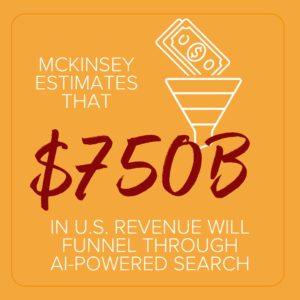
AI-powered search experiences influence how content is discovered, summarized, and trusted. While the core principles of SEO remain the same, the risks of cutting corners and the rewards of doing things right have never been clearer – or more certain.
This guide breaks down what white hat and black hat SEO mean today, the impact of AI search, and what tactics to avoid if you want sustainable visibility.
White hat SEO refers to ethical, guideline-aligned optimization practices designed to improve search visibility by serving users first.
These practices focus on:
White hat SEO works with search engines, not against them. While best practices previously focused solely on content quality, relevance, and technical to-dos, today they also include structuring content so LLMs and AI-driven search can clearly understand, evaluate, and trust it.
Black hat SEO uses deceptive or manipulative tactics to artificially boost rankings.
Instead of improving the user experience, black hat practices attempt to exploit perceived weaknesses in search algorithms. These techniques send up red flags across search engines and typically result in ranking suppression, penalties, or complete removal from search results.
Up until recently, white hat SEO has simply meant following core principles, avoiding obvious spam, and staying within the search engine guidelines.
Those rules haven’t diminished, but AI-driven search has changed how they’re enforced.
Historically, SEO broke down like this:
The focus was largely mechanical. If you didn’t trip known red flags, you were usually fine. Today, that approach has evolved.
SEO is no longer just about keyword optimization and avoiding penalties. It’s about reducing uncertainty for systems designed to be skeptical.
AI systems are far less forgiving of misrepresentation. In many cases, visibility loss happens quietly. There’s no warning — content just stops surfacing.
AI didn’t make SEO harder. It made shortcuts even less effective. If you want to avoid losing credibility and build an SEO strategy that lasts, avoid the following:
⛔ Keyword Stuffing
Overloading content with keywords to manipulate rankings.
⛔ Cloaking
Serving different content to search engines versus users in order to deceive ranking systems.
⛔ Hidden Text or Links
Concealing keywords or links in ways that users cannot see but crawlers can detect.
⛔ Paid, Spammy, or Automated Backlinks
Acquiring outside links through manipulation, purchase, or automation schemes.
⛔ Fake Reviews or Testimonials
Fabricating or manipulating reviews and ratings to falsely inflate credibility or trust.
⛔ False Redirects
Sending users to a different destination than they expect in order to manipulate traffic or rankings.
⛔ Scraped or Duplicated Content
Republishing content from other sources without meaningful originality or value.
⛔ Negative SEO
Using manipulative tactics against competitors in an attempt to damage their search visibility.
⛔ Gateway Pages
Creating low-value pages solely to rank for specific keywords or locations and funneling users elsewhere without providing substantive content.
These tactics undermine trust and are easy for modern algorithms to detect.
Avoiding traditional black hat tactics is still important, but it’s now just the baseline. The bigger risks live in AI-era manipulation patterns that don’t always look malicious on the surface.
What it looks like
The Issue: The intent isn’t to help users — it’s to overwhelm retrieval systems. AI search treats this as noise pollution.
What it looks like
Examples:
The Issue: When claims can’t be verified or corroborated, trust drops quickly.
What it looks like
The Issue: You’re not demonstrating expertise — you’re simulating it.
What it looks like
The Issue: Manipulating schema is closer to lying to AI systems than optimizing for crawlers.
What it looks like
This is the AI-era equivalent of keyword stuffing, and it backfires just as quickly.
What it looks like
The Issue: Even when unintentional, this creates confusion, reduces confidence, and lowers citation likelihood.
What it looks like:
The Issue: AI systems increasingly factor in user engagement signals such as rapid bounce-back, low dwell time, and repeated dissatisfaction. Content that attracts clicks but fails to deliver value erodes credibility.
If a tactic tries to trick understanding instead of improving it, it’s black hat.
Traditional white hat SEO is about doing the right things well — consistently, transparently, and strategically.
Below are the core practices that still define ethical, sustainable SEO today:
✅ Fast-Loading Pages
Pages should load quickly across devices and network conditions to reduce bounce rates and weak user experience signals.
✅ Mobile-First, Crawlable Design
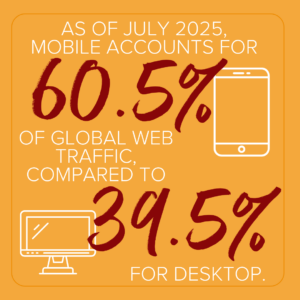
Google uses mobile-first indexing for ranking sites. Websites must function seamlessly on mobile devices, so search engines can efficiently crawl and index content.
✅ Accurate Metadata
Title tags and meta descriptions should clearly reflect the true purpose of each page so user expectations align with on-page content.
✅ Ethical Schema Markup
Structured data should clarify meaning and context, not exaggerate credibility or fabricate signals.
✅ Research-Based Keyword Strategy
Keyword research should guide content clarity and user intent, not drive mechanical repetition or stuffing.
✅ High-Quality, Experience-Driven Content (E-E-A-T)
EEAT are the tenets of Google’s quality guidelines. Content should demonstrate real expertise, experience, authority, and trustworthiness.
✅ Pillar Content with Connected Subtopics
Core topic pages should be supported by related subtopics that reinforce authority and topical depth.
✅ Descriptive Internal Linking
Internal links should use meaningful anchor text to connect related content and clarify topical relationships.
✅ Ethical, High-Quality Backlinks
Backlinks should be earned legitimately, rather than via automation or purchase.
White hat SEO today is less about “gaming the algorithm” and more about clarity, consistency, and credibility. The foundations haven’t disappeared. But now, they carry more weight.
To stay visible in AI-driven search experiences, you must strive for:
 1. Clear Entity and Relationship Signals
What it looks like:
Why it matters:
AI systems interpret entities and relationships, not just keywords. Clarity reduces ambiguity and increases citation likelihood.
What it looks like:
Why it matters:
Language models retrieve and summarize content in segments. Clear structure improves extractability and reduces misinterpretation.
What it looks like:
Why it matters:
AI-assisted content is not inherently problematic. Publishing unreviewed, mass-generated, generic content is.
What it looks like:
Why it matters:
AI systems evaluate content across your entire site. Inconsistent claims or definitions reduce trust and make content less likely to surface or be cited.
What it looks like:
Why it matters:
Modern white hat SEO prioritizes credibility. AI systems reward content that reduces uncertainty.
Rule of Thumb:
Avoiding black hat tactics is table stakes.
Doing the right things — consistently and transparently — is what drives sustainable results in the AI era.
Modern SEO isn’t a checklist or a race to publish more pages than your competitors.
Sustainable SEO requires:
Instead of chasing every algorithm update, focus on building content and sites that are genuinely useful, well-structured, and trustworthy. This approach holds up over time — regardless of how search technology evolves.
These principles also form the foundation of AEO. If you want a practical breakdown of how to apply them (complete with a downloadable checklist), our article “New Search Engine Playbook: How to Optimize for AEO and LLMs” takes you step by step.
If your team is navigating AI-driven search changes or reassessing your current SEO approach, Ironistic can help. From content strategy and technical optimization to full-scale marketing support, we can support your long-term visibility and growth.
Reach out to us below! 👇